
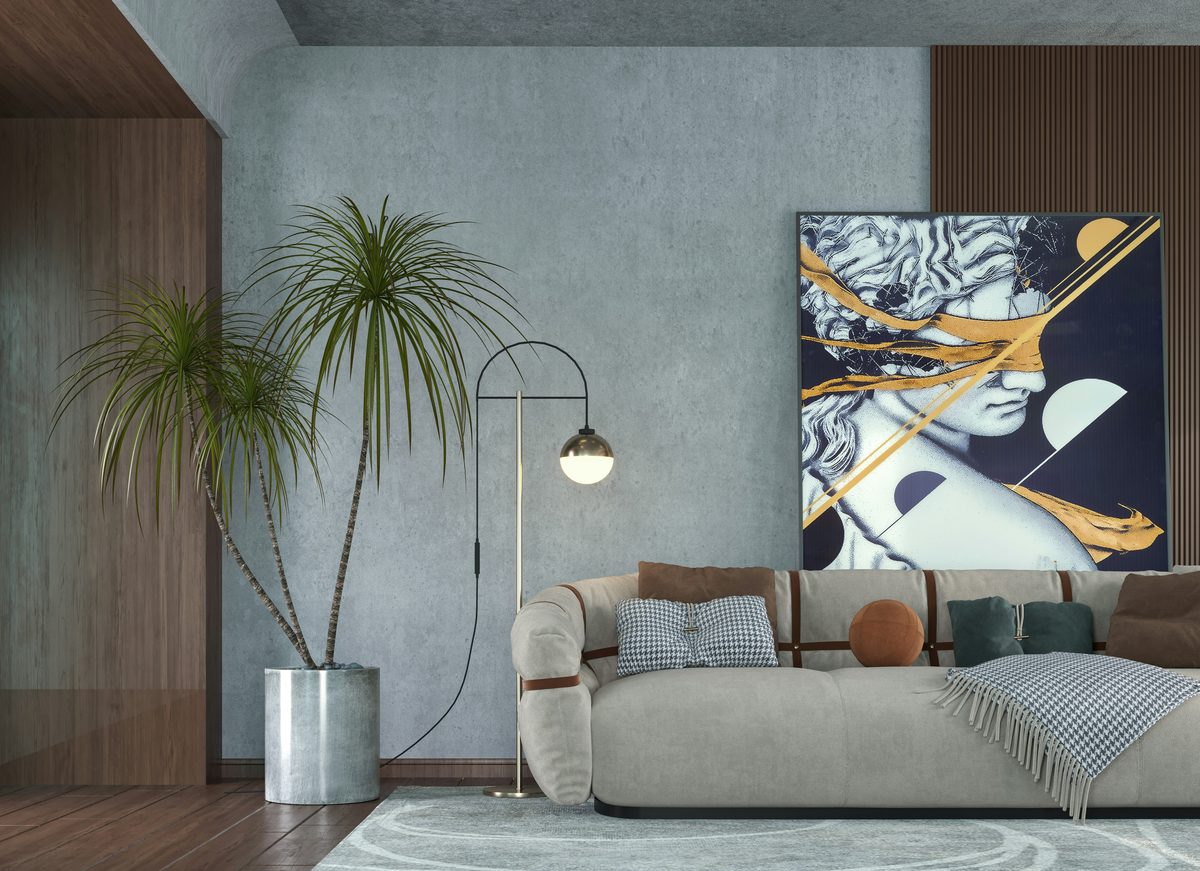
Of all the rooms in a home, the living room carries the most meaning and the least fixed purpose. It is where a house stops being a floor plan and starts being a place to live.
A kitchen has a job. So does a bathroom, a bedroom, a hallway. The living room is different. Its purpose is not a function but a feeling — the sense that this is where the household actually lives. That openness is exactly what makes it the hardest room to design well, and the most rewarding when it is done right. Get the living room wrong and the whole home feels unresolved; get it right and everything else falls into place around it.
The room with no single job
The living room is defined by people, not tasks. In a single day it may host guests, hold a quiet evening, become a play area, and sit entirely empty. Designing for one of these uses at the expense of the others is the most common mistake — the beautiful room that no one relaxes in, or the comfortable one that cannot rise to an occasion. The brief is not a function to serve, but a range of moments to accommodate.
Light and flow come before furniture
Before a single piece is chosen, two invisible things should be understood: how daylight moves through the room across the day, and how people move through it. The best living rooms are organised around these currents rather than against them — seating that meets the light, paths that stay clear, a layout that feels obvious in the body even when you cannot say why. Furniture is the last decision, not the first.
A focal point, not a feature wall
Every living room needs a place where the eye and the body naturally settle — a hearth, a window with a view, a considered arrangement of seating around a shared centre. This is different from a decorated “feature wall”, which draws attention without giving it anywhere to rest. Design toward a genuine focal point and the room gains a quiet order; the rest of the arrangement almost resolves itself.
Design the living room well, and you are not decorating a room — you are deciding how a whole home will feel.
Comfort is a design decision
Comfort and refinement are often treated as opposites, as if a room must be either impressive or inviting. The best living rooms refuse that choice. It is made in the details — the scale of the seating, the softness of the textiles, the warmth of the materials underfoot — the things that let a beautiful room also be a lived-in one. Comfort is not what you add at the end. It is a decision made from the beginning.
It sets the tone for the whole home
Because it is the room guests see first and the family uses most, the living room quietly establishes the language of the entire house — its palette, its level of formality, its sense of ease. Decisions made here ripple outward. That is why it deserves the most thought, and why, when it works, a home feels considered from the moment you walk in.
← All insightsExplore the programmes
Where these ideas become method: the full catalogue of self-paced courses.